
Nederlandse Testdag 2026
Friday 30th of October 2026
The 29th edition of the Dutch Testing Day (De Nederlandse Testdag) will take place at conference center De Eenhoorn in Amersfoort. For years, De Nederlandse Testdag has been the main event where science, education and the business world share new ideas and insights in the field of testing.

Our Sponsors









Location

Meeting Center Amersfoort
Barchman Wuytierslaan 2
3818 LH Amersfoort
Organisation
The 29th Nederlandse Testdag organisation members:

René van Veldhuijzen
Strategic Consultant / Test Positivo at Squerist.

Dr. Petra van den Bos
Assistent Professor at Universiteit Twente
The Nederlandse Testdag Stuurgroep:

Prof. dr. Tanja Vos
Hoogleraar Software Engineering Open Universiteit
Dr. Petra van den Bos
Assistent Professor at Universiteit Twente

Dr. Machiel van der Bijl
CEO and founder Axini

Bart Knaak
IT Consultant at ABN AMRO Bank N.V. via Professional Testing
Registration
We invite you to attend the 29th edition of the Dutch Testing Day (De Nederlandse Testdag):
When: Friday 30th of October 2026
Where: Eenhoorn Meeting Center, Amersfoort, the Netherlands
Registration
Participation is free of charge, but registration is required for organizational purposes. You need to register before the 18th of October 2026. Please register by using this form.
Your registration is handled on first come, first served basis; if we have reached the maximum number of participants, you are put on a waiting list. This maximum may increase when we find more sponsors; you will be moved from the waiting list to register as a participant. If you signed up, but cannot make it, please send an email: dutch.testing.day@gmail.com to cancel your registration.
About the Dutch Testing Day
The Dutch Testing Day (testdag.nl) is the only software testing conference in the Netherlands where academics and industry practitioners meet, share ideas and learn from each other to advance the field of software testing.
Confirmed Keynote Speakers
- Jan Tretmans, Radboud University & TNO-ESI
- Jeroen Mengerink, Polteq B.V.
More details of the program will appear on testdag.nl
Call for sponsors
Please contact dutch.testing.day@gmail.com if you would like to participate as a sponsor of the Dutch Testing Day.
Program
09:00 – 09:30 Registration, coffee and tea
09:30 – 09:45 Opening and welcome
09:45 – 10:30 Keynote – Jan Tretmans
10:30 – 11:00 Coffee break and marketplace
11:00 – 12:00 Talks
11:00 – 11:30 Tom Langerhorst (Langerhorst Test-adviesdiensten) – Testing in an always on situation
11:30 – 12:00 Iris Groenewoudt (Sopra Steria) – How many virtual users should I test? A virtual approach to designing performance test load plans
12:00 – 13:00 Lunch, networking, marketplace with stands from tool providers, universities, service providers, etc.
13:00 – 13:45 Keynote – Jeroen Mengerink
13:45 – 14:30 Lightning Talks
13:45 – 14:00 María Belén-Rodriguez (University of Twente) – PICKLES: a natural language framework for requirement specification and model-based testing
14:00 – 14:15 Nicole van Gijn (QA Company) – How to survive in the AI jungle: Addressing reasoning risk in autonomous systems
14:15 – 14:30 Bram Pellen (Radboud University) – Quick bug detection through black-box checking: a systematic evaluation
14:30 – 15:00 Coffee break and marketplace
15:00 – 16:30 Talks
15:00 – 15:30 Heini Veneberg (Twycis) – The environment is the challenge, not the test object
15:30 – 16:00 Everard de Vree (University of Twente) – Agent-based Test Generation with Large Language Models and Stryker
16:00 – 16:30 Sanne Visser (Praegus) – Actual Intelligence: a path into the future
16:30 – 17:00 Closing (with prizes and announcement next edition)
17:00 – 18:00 Drinks, snacks, networking, marketplace with stands from tool providers, universities, service providers, etc.
KEYNOTE: Testing Challenges for Cyber-Physical Systems
Complex high-tech cyber physical systems increasingly depend on software: software controls, connects, and monitors almost every aspect of system operation, be it a car, a ‘smart’ factory, a printer, an airplane, or a wafer lithography system.
Consequently, ever more system failures are due to software bugs. Moreover, we build ever larger, more complex, and increasingly connected software systems, with more and more options and features, and evolving ever faster.
Together, this may lead to a situation where testing methods cannot keep pace with these developments. This will endanger the fast and thorough testing of future generations of complex systems, thus hampering innovation. In this presentation, we discuss trends, challenges, and research directions for testing future generations of high-tech cyber physical systems.

Jan Tretmans
Universitair Hoofddocent (assoc. prof) at Radboud University Nijmegen
Jan Tretmans is assoc. professor in the Software Science group, Radboud University, Nijmegen, and Senior Research Fellow at TNO-ESI, Eindhoven. For many years, Jan has done research in the area of software testing, in particular, in model-based testing (MBT) and in using models to improve the testing process of high-tech cyber-physical systems.
Currently, Jan is leading the NWO (Dutch Research Organization) applied research project TiCToC: “Testing in Times of Continuous Change”, about model-based testing of evolving systems with high variability.
KEYNOTE: Complexity of Simplicity – Testing a Microservices Architecture
Microservices promise simplicity:
- Smaller services
- Clear boundaries
- Independent deployments
From a development perspective, this sounds like reduced complexity. At first glance, testing seems to benefit as well. Individual services are easier to understand, easier to isolate, and easier to verify. Unit and component tests become more focused and the scope becomes manageable. But the system as a whole tells a different story.
As architectures evolve from monoliths to distributed ecosystems, complexity doesn’t disappear, but it shifts. The complexity now shows in service-to-service interactions, data consistency across boundaries, versioning challenges, asynchronous communication, and independently evolving deployments. Failures are no longer local, they ripple through networks of dependencies.
Testing in such environments is no longer about verifying functionality alone. It becomes about managing uncertainty in distributed systems.
This keynote explores the paradox of microservices: local simplicity versus systemic complexity. It shows that a test strategy must evolve to address three levels of risk to achieve a quality first approach:
- the individual service
- the integration between services
- behavior of the ecosystem as a whole
Rather than advocating more end-to-end tests, this session proposes a layered, architecture-aware testing approach that balances contracts, integration validation, observability, and production feedback.
Because in complex environments, testing is not just about checking correctness, it is about designing quality.
Testing in an always on situation
During my career I have been part of testteams that had to test systems that shouldnot have down time.
How do you test such systems functionally and non-functionally. And more important how do you make sure there is no downtime, when you are testing mission critical systems. And how to bring the message that you should or shouldn’t go live because you have doubts. And what to do when you go live but you shouldn’t have gone.
With real life examples I will make clear that sometimes you have to take a risk

Tom Langerhorst
Senior Test Consultant at Langerhorst Test-adviesdiensten
Tom Marco Langerhorst is an experienced software tester with a clear mission: deliver quality, create value, and make a meaningful impact for clients. For Tom, software testing is much more than finding defects—it is a profession where craftsmanship, passion, and determination come together. He is known for his strong work ethic, his ability to quickly grasp complex subjects, and his talent for translating them into clear and actionable insights. Within teams, he naturally takes on a coaching role, helping colleagues grow and succeed together.
Outside of work, Tom is a dedicated family man and an enthusiastic cyclist. It is on the bike where he often finds parallels with the world of software development. Just like in elite sports, success is not only about talent or speed; it is about teamwork, discipline, and continuous improvement. An individual rider may go faster alone, but a team goes farther together. The same principle applies to software development: the best outcomes are achieved when testers, developers, and business stakeholders work together toward a shared goal.
In his sessions, Tom connects the world of software quality with the lessons learned from cycling and high-performance sports. He demonstrates that sustainable success is not built by individual heroes, but by teams that challenge, support, and strengthen one another in pursuit of a common objective.
How many virtual users should I test? A virtual approach to designing performance test load plans
Many performance tests start with a simple question: “How many virtual users should I test with?”
User count alone rarely predicts bottlenecks. Congestion emerges from where users go, how long they stay, and where journeys overlap.
In this presentation, we explore a visual map of a fictional holiday park application to demonstrate how user journeys can be transformed into a realistic workload model. Following the journeys through hotels, campsites, cabins, and viewpoints, we gradually build a model by identifying behavioural groups, estimating arrival rates and dwell times, and revealing how concurrency creates hotspots.
Along the way, the audience is invited to predict outcomes and challenge assumptions, illustrating how different modelling choices lead to different testing strategies.
Attendees will leave with a practical framework for designing realistic performance test workloads, enabling them to justify their load-testing assumptions and identify performance risks before creating their load tests.
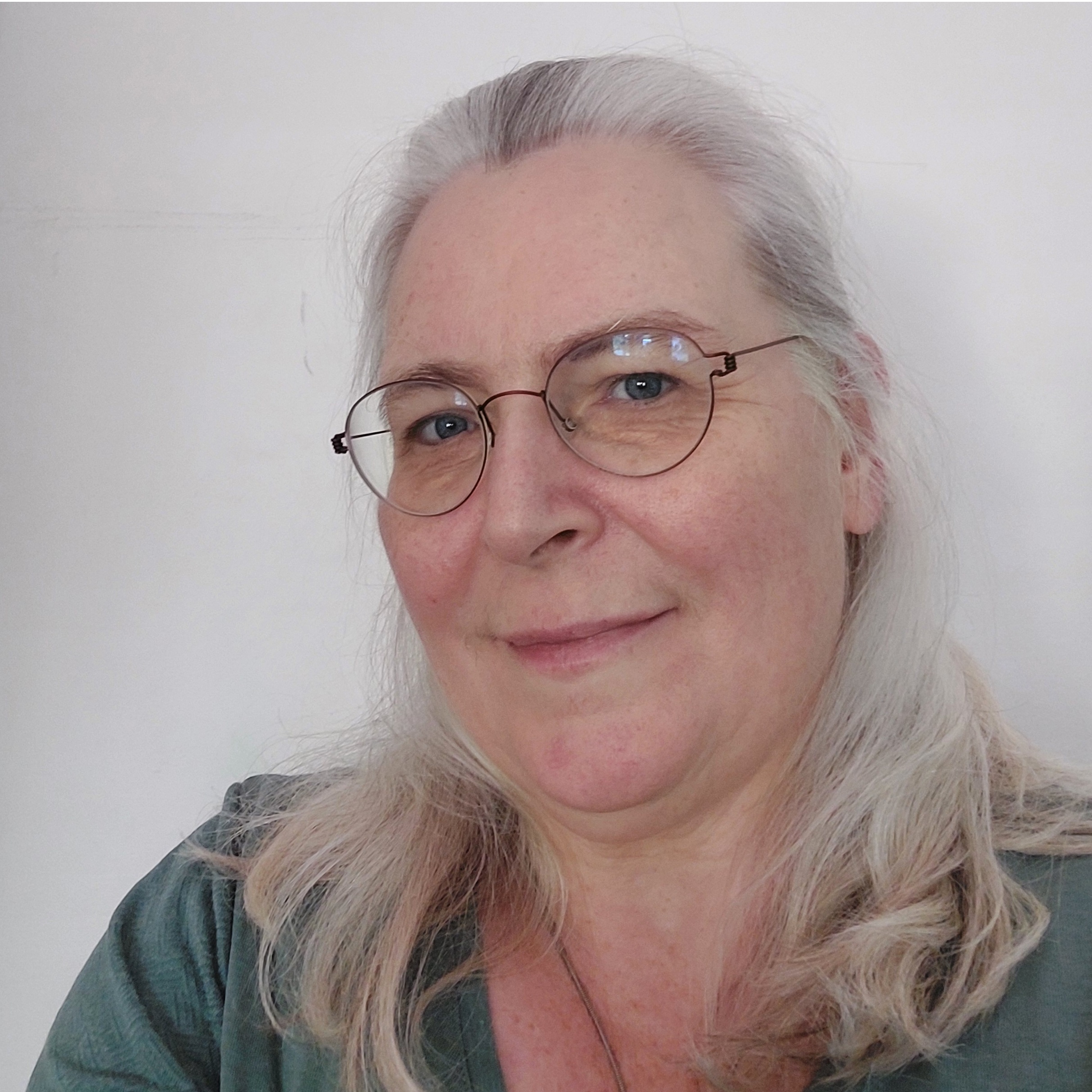
Iris Groenewoudt
Test Consultant at Sopra Steria
Iris Groenewoudt has been working as a software tester for over 22 years and moved into performance testing five years ago. Fascinated by data and naturally curious, she found performance testing to be the perfect playground. The large amounts of data generated during a test make it possible to uncover patterns, investigate system behaviour, and understand the story behind the numbers.
Rather than accepting rules of thumb, Iris enjoys exploring why things work the way they do. Her approach to workload modelling is the result of that curiosity and her drive to make sense of a complex subject.
PICKLES: a natural language framework for requirement specification and model-based testing
This talk introduces PICKLES, a structured natural-language extension of Gherkin designed to bridge the gap between human-readable specifications and Model-Based Testing. It enables bi-directional translation between scenarios and formal models, allowing tests to remain readable while still supporting automated model-based test generation. By combining multiple scenarios into a unified “master model,” standard MBT techniques can be applied directly, and the generated formal test cases can be then expressed back in natural language, using consisting terminology. This way, we can improve automation and coverage without sacrificing specification clarity.

María Belén-Rodríguez
PhD Candidate at University of Twente
María Belén Rodríguez is a PhD candidate in the Formal Methods and Tools group at the University of Twente. Her research focuses on software quality, particularly at the intersection of formal testing techniques, Behavior-Driven Development, and risk analysis, with the goal of bringing the rigour of formal methods into industrial practice for critical software systems. Before starting her PhD, she worked for four years in the space sector as a software developer and systems engineer, an experience that influenced her current research.
How to survive in the AI jungle: Addressing reasoning risk in autonomous systems
“100 percent correct does not exist in AI. So what does quality mean?”
AI is redefining how we build software and how we test it. In this talk, Nicole introduces Evaluaite, a practical framework for governing quality in AI-driven systems. She explains why traditional pass or fail testing no longer works in probabilistic environments and how testers can evolve their role in the AI era. Through real-world examples and practical approaches such as LLM evaluations, she demonstrates how QA professionals can move beyond binary thinking and make AI quality measurable, manageable, and strategically governed.

Nicole van Gijn
Thought leader AI Quality at QA Company
Nicole van Gijn is Thought leader AI Quality, where she researches how to enhance software quality and test automation for AI applications. She developed Evaluaite, a framework for testing AI-driven systems, and explores how classical QA principles evolve towards risk-based AI quality. With a background in data-intensive testing and continuous delivery environments, Nicole combines the pragmatism of a test professional with the curiosity of an AI researcher.
Quick bug detection through black-box checking: a systematic evaluation
Combinations of active automata learning, model-based testing and model checking have been successfully used in numerous applications, e.g., for spotting bugs in implementations of major network protocols and to support refactoring of embedded controllers.
However, in the large majority of these applications, model checking is only used at the very end, when no counterexample can be found anymore for the latest hypothesis model. This contrasts with the original proposal of black-box checking (BBC) by Peled, Vardi & Yannakakis, which applies model checking for all hypotheses, also the intermediate ones. We present the first systematic evaluation of the ability of BBC to find bugs quickly, based on 77 benchmark models from real protocol implementations and controllers for which specifications of safety properties are available.
Our main findings are: (a) In cases where the full model can be learned, BBC detects violations of the specifications with just 3% of the queries needed by an approach in which model checking is only used for the full model. (b) Even when the full model cannot be learned, BBC is still able to detect many violations of the specification. In particular, BBC manages to detect 96% of the safety property violations in the challenging RERS 2019 industrial LTL benchmarks. (c)
Our results also confirm that BBC is way more effective than existing MBT algorithms in finding deep bugs in implementations.

Bram Pellen
PhD Student at Radboud University Nijmegen
Bram Pellen is a PhD student at the Radboud University Nijmegen who aims to remove obstacles that prevent the widespread industrial use of the automated software testing approach known as black-box checking.
The environment is the challenge, not the test object
We often talk about the challenges of the test object itself: high availability, high risk, or legacy systems. Yet, there is one common challenge that underlies them all: the people around you and the organization in which you operate. While organizations
have been made more agile through frameworks like Agile Scrum, why hasn’t predictability increased? Why is quality still under pressure? As a local saying goes: “We drink a glass, we take a leak, and everything stays the same.”;
I believe that we, as testers, need a different mindset and must shift further left. Especially with the rise of AI, we need to validate quality much earlier. This ensures agility isn’t reduced to “mopping the floor with the tap running”, but instead enables us to adapt agilely to implement the right feature (without the need for extensive rework), and ensuring that integration and end-to-end testing can simply take place as scheduled.
In my presentation, I will show what extra preparation you can do as a team to make your work genuinely fun again. Using testing to prove that the system simply does what it is supposed to do. That is where the real challenge lies, making it practically irrelevant whether you are working on a legacy system, a high-availability network, or a mission-critical solution.
Takeaway
Garbage in is garbage out. Learn what you can do to prevent it, so you can refocus your energy on the true challenges of the test object!

Heini Veneberg
Business Companion at Twycis
Heini Veneberg, 60, works as a Business Companion at Twycis. Heini brings over 38 years of experience in Business Analysis, Testing, Test Management, Project Management, and Support Management. His assignments have spanned various sectors, including Industry (Defense, Telecom, Steel Construction), Business (Dutch Tax and Customs Administration), and Energy (TenneT). Throughout his career, he has developed a deep fascination with the interplay and continuous shifts within the development process, and how they impact the final outcome—specifically regarding the functional quality and practical application of the delivered system.
Agent-based Test Generation with Large Language Models and Stryker
Software Testing is an essential but time-intensive discipline within Software Engineering. Once a software test is in place, we can evaluate its quality using, among other metrics, mutation testing. This method of analysis uses artificial source code bugs (mutations), and measures how many of them cause test failure. It is itself notoriously time consuming but provides feedback on the essential part of Software Testing: potential fault detection.
Recently, Large Language Models (LLMs) have shown promising results in automating a wide range of classical Software Engineering problems. Additionally, these models can be trained to use tools to form so-called agents, capable of completely autonomous work. In this thesis, we extend research in this direction by providing an agent with various tools before prompting it for the generation of entire JavaScript test suites. In order to provide feedback signals on generated test quality, we integrate the JavaScript mutation framework StrykerJS at various points in the test generation process.
We evaluate the effectiveness and cost of the agentic test generation approach by comparing against an LLM-based JavaScript test generation framework that integrates test quality feedback but does not enable autonomous tool calls. Additionally, we measure the effectiveness of the mutation feedback by splitting our experiments into groups with and without detailed mutant information. We find that our solution can create stronger tests while re ducing LLM token costs. Mutation analysis proves to be a useful signal, but only when scoped correctly

Everard de Vree
Student at University of Twente
Hello! I’m Everard de Vree, 23 years old and I just finished the Software Technology track at the Master Computer Science at the University of Twente. I’m interested in supporting agentic engineering with classical software analysis methods, which fit really well within my thesis.
Now that my thesis is finished I’ll have some more time to spend on my hobbies: motorcycling, (some) sports, and reading. I’m excited to learn from everyone at the Dutch Testing Day and I hope to see you there!
Actual Intelligence: a path into the future
Another day, another useless job interview. Last Thursday afternoon, in a glass-walled, fluorescently lit, tiny meeting room, sat our candidate. They were proudly talking up their previous test assignment. This tester, you see, had built a regression test suite in Cypress, no fewer than 457 test cases! My co-interviewer, our lead developer had just one question for this candidate: What had you built the test suite for? The answer? It was the assignment. They were told, ‘automate the 457 test cases listed in this Excel-sheet’. And this tester had executed their assignment to the letter. Not a word about feedback loops, risks, requirements or anything that indicated they understood why quality matters.
Unfortunately, I encounter this far too often. Testing has been a profession for 40 odd years and still we scrape the bottom of the barrel. Folks that still don’t understand what our work is about.
It is also why I am so tired of the discussion that we as testers…
…need to become SDETs
…need to learn how to code
…need to be able to work with AI
and so on.
The-latest-hype-technology won’t take your job, but testers who use The-latest-hype-technology will. Ever heard that quote? What nonsense! The people who are going to take your job are the testers who care to build good software. The testers that understand why our profession exists.
What we need is ‘actual’ intelligence. Testers who feel responsible, who dare to make difficult decisions and have the patience to solve complex problems. We need to acknowledge that our IT colleagues still quite frequently have bad experiences with (bad) testers. Testers who position themselves as old-fashioned gatekeepers. And testers who engage in pedantic discussions about the definitions of integration testing versus system integration testing. That is not our role! Our role is not to slow down software development, right? We are not here to create barriers between build and go-live, are we? Our goal is to deliver good, working software that fits the way of working of the user. Right? Somedays even I’m not sure we all understand that.
Yet it is up to us. To stay driven by our craftsmanship, our professionalism. To find and walk the path for to better future. Curious what that might look like? This presentation is about how we can map out that route together, with actual intelligence.

Sanne Visser
Test Lead at Praegus
Sanne Visser is a test manager currently working in the Netherlands. She has over a decade of experience in software testing.
Throughout her career she has worked on a wide variety of projects from insurance systems to railway software solutions. Her main technical focus is E2E testing in complex software systems. She was chairperson of the blockchain testing community from 2018 to 2021.
Sanne is a part-time stoic and loves talking to her team about learning resilience using stoicism. Her motto is “Every effort is beautiful, you are what you do everyday”.
Speakers
Dr. ir. Jan Tretmans
Universitair Hoofddocent (assoc prof) at Radboud University Nijmegen

Jeroen Mengerink
R&D Manager at Polteq
Tom Langerhorst
Senior Test Consultant at Langerhorst Test-adviesdiensten
Iris Groenewoudt
Test Consultant at Sopra Steria
María Belén-Rodríguez
PhD Candidate at University of Twente
Nicole van Gijn
Thought leader AI Quality at QA Company
Bram Pellen
PhD Student at Radboud University Nijmegen
Heini Veneberg
Business Companion at Twycis